Uncategorized

Blog banner on how to control blood sugar naturally featuring Dr. Anjali Verma with healthy foods, exercise, stress management, and natural diabetes care tips.
Uncategorized

How to Control Blood Sugar Naturally

Keeping your blood sugar under control is one of the most important steps towards living a healthy and active life. Whether you have diabetes, prediabetes, or simply want to reduce your future health risks, maintaining healthy blood sugar levels can protect your heart, kidneys, eyes, and overall well-being. Many people believe that controlling blood sugar only means taking medicines. While medicines play an important role, your everyday habits such as the food you eat, your physical activity, sleep quality, stress levels, and body weight have an equally powerful impact on your health. At B Healthy Clinic, we often meet patients who think they must completely stop eating their favourite foods or follow extremely strict diets. In reality, successful diabetes management is about making practical lifestyle changes that you can maintain for years. Dr. Anjali Verma (MBBS, MD – Medicine) believes that small, consistent healthy habits are far more effective than temporary changes. Located in Nipania, Indore, B Healthy Clinic provides personalized diabetes care for patients from Vijay Nagar, Pipliya Kumar, Mahalakshmi Nagar, Scheme No. 78, Scheme No. 134, Samar Park Colony, Hare Krishna Vihar, Shalimar Township, MR-5 Road, Garg Resort Colony, and nearby areas. Our goal is to help every patient achieve better health through evidence-based treatment and sustainable lifestyle guidance. If you are searching for the Best Diabetologist in Nipania indore, this guide will help you understand natural ways to improve Blood Sugar Control and support long-term health. What is Blood Sugar? Blood sugar, also called blood glucose, is the main source of energy for your body’s cells. Every time you eat, your digestive system converts carbohydrates into glucose, which enters your bloodstream. A hormone called insulin helps move this glucose into your body’s cells, where it is used to produce energy. When your body cannot produce enough insulin or cannot use it properly, glucose starts building up in the bloodstream. This leads to high blood sugar levels, commonly known as diabetes. Healthy blood sugar levels are essential because they help your body function normally. When blood sugar remains high for a long time, it can gradually damage the heart, kidneys, eyes, nerves, and blood vessels. The good news is that healthy lifestyle choices, regular monitoring, and timely medical care can help maintain better Blood Sugar Control and reduce the risk of complications. Why Does Blood Sugar Increase? High blood sugar usually develops because of a combination of lifestyle habits and medical factors rather than a single cause. Some of the most common reasons include: Unhealthy Eating Habits Eating excessive sugary foods, refined carbohydrates, processed snacks, and sugary drinks regularly can cause blood sugar levels to rise. Lack of Physical Activity A sedentary lifestyle reduces the body’s ability to use insulin effectively, making it harder to control blood sugar. Being Overweight Excess body weight, especially around the abdomen, increases insulin resistance and is one of the leading causes of Type 2 Diabetes. Stress Long-term stress increases the release of hormones like cortisol, which can raise blood sugar levels. Poor Sleep Sleeping less than 7 hours regularly affects hormone balance and reduces insulin sensitivity. Family History If your parents or close family members have diabetes, your chances of developing the condition are higher. Hormonal Conditions Health conditions such as PCOD/PCOS, thyroid disorders, and metabolic syndrome can also increase the risk of high blood sugar. Early Signs That Your Blood Sugar May Be High Your body often gives warning signs before diabetes becomes severe. Paying attention to these symptoms can help you seek treatment early. Some common signs include: Feeling thirsty throughout the day Frequent urination, especially at night Constant tiredness Increased hunger Blurred vision Slow healing of wounds Frequent infections Tingling in hands or feet Dry mouth Unexplained weight loss If these symptoms continue for several days, do not ignore them. A simple health check-up can help identify the cause and allow treatment to begin before complications develop. 10 Natural Ways to Control Blood Sugar 1. Eat a Balanced, High-Fibre Diet Your daily food choices have the biggest impact on Blood Sugar Control. Instead of avoiding carbohydrates completely, choose healthier options like whole grains, green vegetables, pulses, fruits in controlled portions, and lean protein. Foods rich in fibre help slow the absorption of sugar into the bloodstream and keep you feeling full for longer. 2. Stay Physically Active Regular exercise helps your muscles use glucose more efficiently and improves insulin sensitivity. A simple 30–45 minute walk, cycling, yoga, swimming, or light strength training most days of the week can significantly improve blood sugar levels. 3. Drink Enough Water Water helps your kidneys remove excess sugar from the body through urine and prevents dehydration. Aim to drink enough water throughout the day instead of sugary drinks or packaged juices. 4. Sleep for 7–8 Hours Every Night Good-quality sleep supports healthy hormone balance and improves the body’s ability to regulate blood sugar. Poor sleep is linked to insulin resistance and weight gain, making diabetes management more difficult. 5. Manage Stress Effectively Stress affects more than your mental health—it can also increase blood sugar levels. Simple activities like deep breathing, meditation, yoga, reading, gardening, or spending time with family can help reduce stress naturally. 6. Choose Healthy Snacks Replace chips, biscuits, and sweets with healthier options such as roasted chana, nuts, seeds, sprouts, or fresh fruit. Small changes like these can improve Blood Sugar Control over time. 7. Maintain a Healthy Weight Even losing a small amount of excess weight can improve insulin sensitivity and help lower blood sugar naturally. Focus on gradual, sustainable weight loss rather than crash diets. 8. Reduce Sugary Drinks Soft drinks, packaged fruit juices, energy drinks, and sweetened beverages can quickly increase blood sugar. Choose water, buttermilk, lemon water without sugar, or unsweetened herbal tea instead. 9. Monitor Your Blood Sugar Regularly Regular blood sugar monitoring helps you understand how your body responds to food, exercise, medicines, and daily habits. Tracking your results also helps your doctor adjust your treatment when necessary. 10. Follow Your Doctor’s Advice

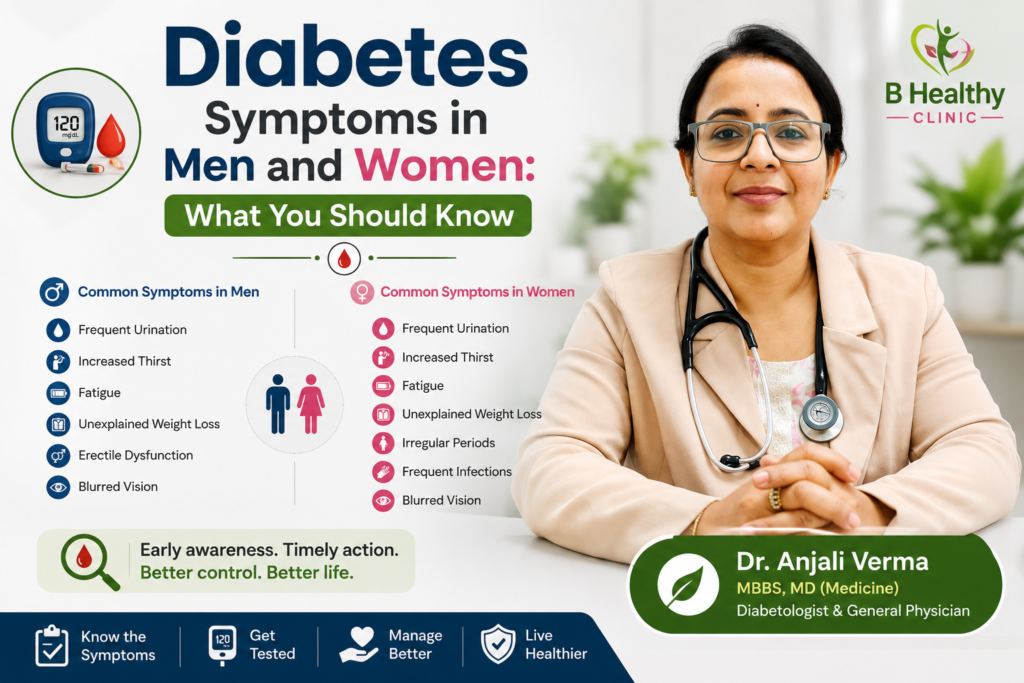
Diabetes symptoms in men and women infographic featuring Dr. Anjali Verma with common warning signs and early diabetes awareness.
Uncategorized

Diabetes Symptoms in Men and Women: What You Should Know

Have you been feeling tired even after getting enough sleep? Do you feel thirsty more often than usual or wake up several times during the night to use the washroom? Many people ignore these changes because they believe they are caused by stress, work pressure, or ageing. However, these can be the Early Symptoms of Diabetes, and recognizing them at the right time can make a significant difference to your long-term health. Diabetes is one of the fastest-growing lifestyle diseases in India. What makes it challenging is that it usually develops slowly. In the beginning, the symptoms are often mild, so people continue with their daily routine without realizing that their blood sugar levels are increasing. Unfortunately, by the time the condition is diagnosed, it may already have started affecting the eyes, kidneys, nerves, or heart. At B Healthy Clinic, we often meet patients who tell us, “I thought it was just weakness,” or “I assumed I was tired because of work.” After proper evaluation, many discover that uncontrolled blood sugar is the real cause of their health problems. This is why Dr. Anjali Verma (MBBS, MD – Medicine) believes that awareness is the first step towards preventing diabetes complications. Located in Nipania, Indore, B Healthy Clinic provides comprehensive diabetes care for patients across nearby areas, including Vijay Nagar, Pipliya Kumar, Mahalakshmi Nagar, Scheme No. 78, Scheme No. 134, Samar Park Colony, Hare Krishna Vihar, Shalimar Township, MR-5 Road, and Garg Resort Colony. Many families choose the clinic because it offers personalized care close to home, making regular follow-up and long-term diabetes management more convenient. If you are searching for the Best Diabetologist in Indore, this guide will help you understand the Diabetes Symptoms in Men and Women, learn the warning signs of high blood sugar, and know when it is time to seek medical advice. What is Diabetes? Our body needs glucose (sugar) to produce energy. After we eat, glucose enters the bloodstream, and a hormone called insulin helps move it into the body’s cells. Diabetes develops when this process stops working properly. Either the body does not produce enough insulin, or it cannot use insulin effectively. As a result, sugar remains in the bloodstream instead of reaching the cells, causing blood sugar levels to rise. Over time, uncontrolled diabetes can increase the risk of heart disease, kidney damage, nerve problems, poor eyesight, and delayed wound healing. The good news is that diabetes can be managed successfully with early diagnosis, healthy lifestyle changes, regular monitoring, and proper medical treatment. At B Healthy Clinic, every treatment plan is personalized. Instead of following the same approach for every patient, Dr. Anjali Verma carefully understands your lifestyle, eating habits, family history, existing medical conditions, and daily routine before recommending the right treatment. This personalized approach helps patients achieve better blood sugar control and improve their overall health. Why Recognizing Diabetes Symptoms Early Is Important Many people believe diabetes only affects blood sugar levels. In reality, uncontrolled diabetes can silently damage different organs for months or even years before obvious complications appear. The earlier diabetes is diagnosed, the easier it becomes to manage. Early treatment can help protect your heart, kidneys, eyes, and nerves while reducing the risk of future health problems. This is why regular health check-ups are especially important if you have a family history of diabetes, are overweight, have high blood pressure, or live a physically inactive lifestyle. Common Diabetes Symptoms You Should Never Ignore Although every person’s experience is different, there are some warning signs that should never be ignored. Frequent Urination One of the earliest signs of diabetes is visiting the washroom more often than usual, especially during the night. This happens because the kidneys try to remove excess sugar from the body through urine. Feeling Thirsty All the Time When the body loses more water through frequent urination, it naturally makes you feel thirsty. Even after drinking enough water, the thirst may continue if blood sugar remains high. Constant Tiredness Do you often feel exhausted without doing much physical work? This happens because your body’s cells are unable to use glucose properly for energy. Persistent tiredness is one of the most common High Blood Sugar Symptoms. Feeling Hungry More Often Even after eating a full meal, many people with diabetes continue to feel hungry because their body is not getting enough energy from glucose. Blurred Vision High blood sugar can temporarily affect the tiny blood vessels in your eyes, leading to blurred vision. Many people mistake this for an eye problem when the real cause may be uncontrolled diabetes. Slow Healing of Cuts and Wounds If small cuts or wounds are taking longer than usual to heal, it could be a sign that high blood sugar is affecting your body’s natural healing process. Frequent Infections Repeated skin infections, fungal infections, urinary tract infections, or gum infections may also indicate diabetes because high blood sugar weakens the immune system. Diabetes Symptoms in Men While many symptoms are common in both men and women, some health concerns are more noticeable in men. Along with frequent urination, excessive thirst, tiredness, and blurred vision, some men may experience reduced stamina, erectile dysfunction, or low testosterone levels due to uncontrolled diabetes. These symptoms often develop gradually, which is why regular health check-ups are important. Diabetes Symptoms in Women Women may experience the same common symptoms, but they can also develop frequent urinary tract infections, recurrent yeast infections, or hormonal issues associated with insulin resistance, such as PCOD/PCOS. Persistent fatigue, increased hunger, slow wound healing, and unexplained weight changes should never be ignored. Early medical attention can help prevent complications and improve overall health. What Causes Diabetes? Diabetes does not develop because of eating sugar alone. It usually results from a combination of several factors, including: Family history of diabetes Being overweight or obese Lack of physical activity Unhealthy eating habits High blood pressure High cholesterol PCOD/PCOS Stress and poor sleep Increasing age Insulin resistance Small lifestyle improvements such as eating balanced

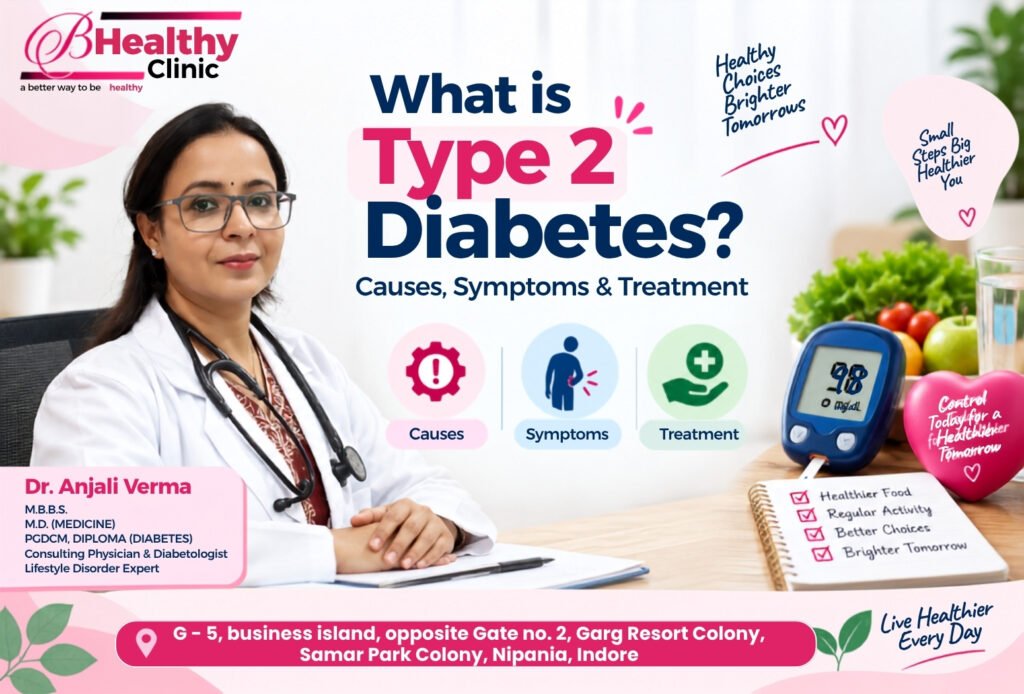
Educational infographic explaining Type 2 Diabetes, including its causes, symptoms, and treatment, featuring Dr. Anjali Verma and healthy lifestyle guidance.
Uncategorized

What is Type 2 Diabetes? Causes, Symptoms & Treatment

Living with diabetes can feel confusing at first, but the good news is that with the right treatment and healthy lifestyle changes, it can be managed successfully. Today, millions of people are living healthy lives by controlling their blood sugar levels and following medical advice. Understanding the condition early is the first step toward better health. If you are looking for the Best Diabetologist in Indore, this complete guide will help you understand everything about Type 2 Diabetes in simple language. At B Healthy Clinic, Dr. Anjali Verma, an experienced Diabetes Doctor in Indore, helps patients manage diabetes with personalized treatment plans, healthy lifestyle guidance, and long-term Blood Sugar Control. Whether you live in Nipania, Vijay Nagar, Scheme No. 78, Scheme No. 134, Mahalakshmi Nagar, Pipliya Kumar, Samar Park Colony, Hare Krishna Vihar, Shalimar Township, or nearby areas, this guide will answer the most common questions people search on Google about Type 2 Diabetes. What is Type 2 Diabetes? Type 2 Diabetes is a long-term health condition in which your body cannot use insulin properly. Insulin is a hormone produced by the pancreas that helps move sugar (glucose) from your blood into your body’s cells, where it is used for energy. When your body becomes resistant to insulin or does not produce enough insulin, sugar starts building up in the bloodstream. This leads to high blood sugar levels, which can damage different parts of the body if not managed properly. Unlike Type 1 Diabetes, Type 2 Diabetes usually develops slowly. Many people do not notice any symptoms in the early stages. That is why regular health check-ups and early diagnosis are very important. At B Healthy Clinic, we provide personalized Type 2 Diabetes Treatment to help patients maintain healthy blood sugar levels and reduce the risk of complications. Under the guidance of Dr. Anjali Verma, patients receive complete diabetes care based on their age, lifestyle, and medical history. Why is Type 2 Diabetes Becoming So Common? One of the biggest reasons behind the growing number of diabetes cases is our modern lifestyle. Many people spend long hours sitting, eat unhealthy food, experience high stress, and do not get enough sleep. These habits increase the risk of developing diabetes. India is often called the “Diabetes Capital of the World” because the number of people living with diabetes continues to increase every year. Early awareness, regular health check-ups, and healthy lifestyle choices can help prevent or delay the condition. If you have a family history of diabetes or notice symptoms such as increased thirst, frequent urination, or unexplained tiredness, it is important to consult the Best Diabetologist in Indore as early as possible. What Causes Type 2 Diabetes? There is no single cause of Type 2 Diabetes. Instead, several factors work together to increase the risk. 1. Insulin Resistance The most common cause of Type 2 Diabetes is insulin resistance. This means your body’s cells stop responding properly to insulin, causing sugar to remain in your bloodstream. 2. Being Overweight or Obese Extra body weight, especially around the waist, makes it harder for insulin to work properly. This is one of the leading reasons why many adults develop Type 2 Diabetes. Maintaining a healthy weight through proper nutrition and regular exercise plays an important role in Blood Sugar Control. 3. Family History If your parents, brothers, or sisters have diabetes, your chances of developing the condition are higher. However, healthy lifestyle habits can significantly reduce your overall risk. 4. Lack of Physical Activity Regular physical activity helps your body use insulin more effectively. People who rarely exercise are more likely to develop diabetes than those who stay active. 5. Unhealthy Eating Habits Eating excessive sugary foods, processed snacks, soft drinks, and fast food regularly can increase blood sugar levels and contribute to weight gain. A balanced diet is an important part of Type 2 Diabetes Treatment and long-term health. 6. Increasing Age Although younger adults are now also developing diabetes, the risk becomes higher after the age of 35–40 years. This is why regular screening becomes increasingly important as you grow older. 7. Stress and Poor Sleep Long-term stress and inadequate sleep can affect hormone balance, increase insulin resistance, and raise blood sugar levels over time. Good sleep and stress management are essential parts of diabetes care. Who is at Higher Risk of Type 2 Diabetes? You may have a higher chance of developing diabetes if you: Are overweight or obese Have a family history of diabetes Have high blood pressure Have high cholesterol Live a physically inactive lifestyle Have PCOD/PCOS Frequently consume sugary drinks and processed foods Have prediabetes Are above 35 years of age If any of these risk factors apply to you, scheduling a consultation with a Diabetes Doctor in Indore can help with early detection and prevention. Why Early Diagnosis Matters Many people ignore the early signs of diabetes because they seem mild. Unfortunately, untreated diabetes can gradually damage the eyes, kidneys, nerves, heart, and blood vessels. Early diagnosis allows doctors to start treatment before serious complications develop. Regular health check-ups, healthy eating, physical activity, and proper Blood Sugar Control can significantly improve your quality of life. At B Healthy Clinic, Dr. Anjali Verma believes that educating patients is just as important as prescribing medicines. Every treatment plan is designed to help patients understand their condition, make healthier choices, and achieve long-term diabetes management. Early Symptoms of Type 2 Diabetes One of the biggest challenges with Type 2 Diabetes is that many people do not notice the symptoms in the early stages. The condition often develops slowly, and some people may live with high blood sugar for months or even years without realizing it. Ignoring these early warning signs can increase the risk of serious health problems. If you notice any of the following symptoms, it is a good idea to visit the Best Diabetologist in Indore for a proper health check-up. 1. Frequent Urination When your blood sugar becomes too high, your kidneys try to remove

Expert Diabetes Care by Dr. Anjali Verma | Book Your Consultation Today

X
Scroll to Top